
Introduction to Machine Learning
Introduction
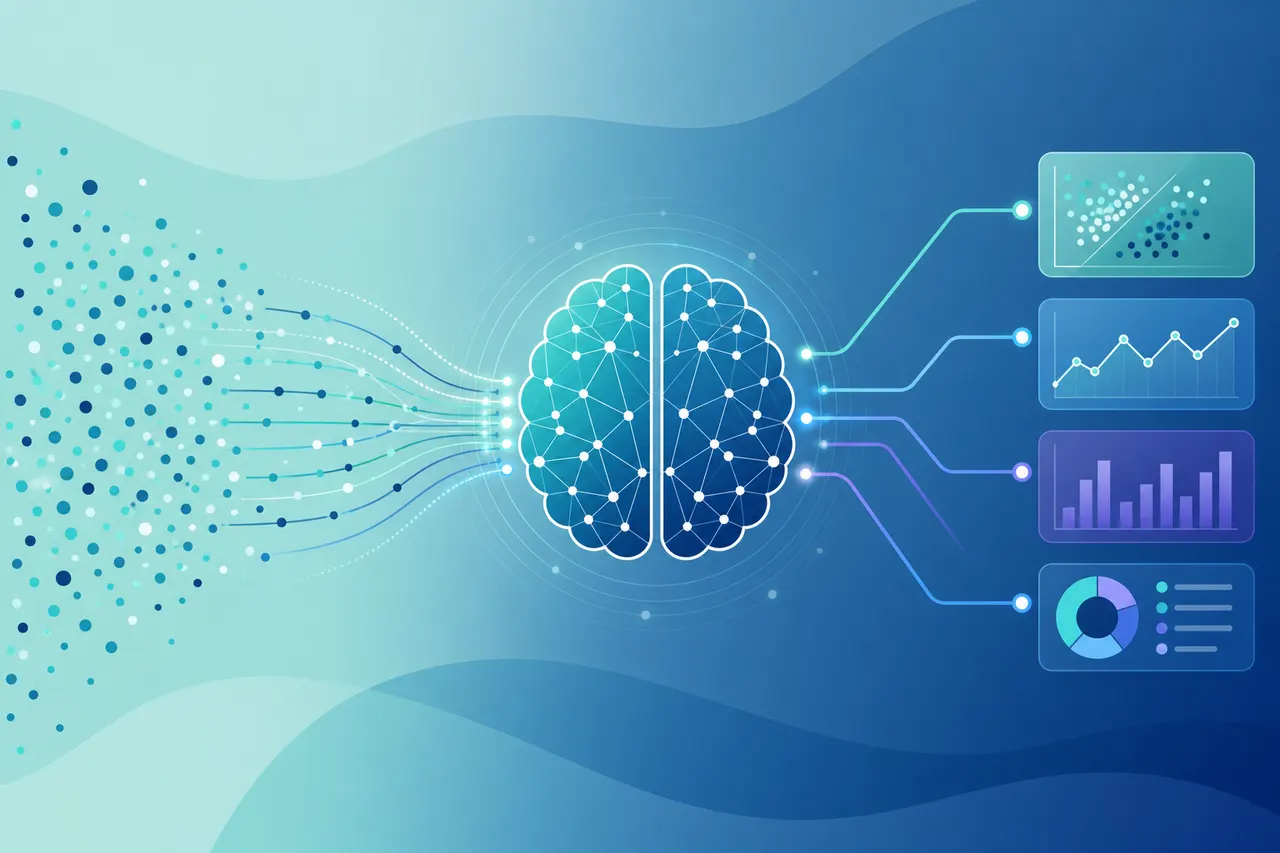
Machine learning (ML) is a branch of artificial intelligence in which systems learn patterns from data instead of being explicitly programmed with rules. Given enough examples, an ML model can make predictions or decisions on new, unseen data. ML powers everyday technology from spam filters and recommendations to fraud detection and image recognition.
Definition
Machine Learning is the study of computer algorithms that can improve automatically through experience and by the use of data.
Types
Supervised Learning
Learning from labeled data to make predictions or classifications
Unsupervised Learning
Finding patterns and structures in unlabeled data
Reinforcement Learning
Learning through interaction with an environment
Semi-supervised Learning
Learning from both labeled and unlabeled data
Use Cases
- Image and speech recognition
- Natural language processing
- Recommendation systems
- Fraud detection
- Autonomous vehicles
Implementation
Machine learning models are implemented using various algorithms and frameworks, with popular choices including scikit-learn, TensorFlow, and PyTorch.
Relationships
Statistics
ML heavily relies on statistical concepts and methods
Data Science
ML is a key component of data science workflows
Computer Science
ML builds on fundamental computer science principles
Dependencies
- Quality training data
- Computing resources
- Mathematical understanding
- Programming skills
In Practice
ML is usually grouped into supervised learning (learning from labeled examples), unsupervised learning (finding structure in unlabeled data), and reinforcement learning (learning from rewards). Choosing the right category, and clean, representative data, matters far more to results than picking any single algorithm.
Key Points
- ML systems learn from data
- Different types suit different problems
- Quality of data affects model performance
- Regular retraining may be necessary
References
- Machine Learning Crash Course — Google’s fast-paced, practical introduction to machine learning
- ML Fundamentals — DeepLearning.AI’s comprehensive machine learning courses